Structural Drying and Dehumidification in Elizabeth, NJ
Once standing water is gone, moisture still hides in framing, subfloors and shared walls. The drying team sets equipment from meter readings and keeps adjusting until every material is dry.
(888) 471-9821Call about structural drying in Elizabeth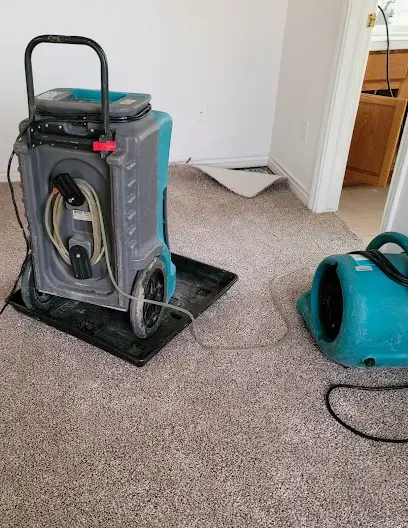
First steps for structural drying and dehumidification in Elizabeth
Measure
Temperature, humidity and moisture content set the equipment plan.
Place equipment
Dehumidifiers and air movers go where readings are highest.
Adjust daily
Machines are moved or removed as materials dry.
Confirm dry
Readings match an unaffected reference before equipment leaves.
How structural drying and dehumidification is handled in Elizabeth
Moisture mapped before equipment
The tech who does the walkthrough reads drywall, framing, subfloor and block foundation walls with pinless meters and thermal imaging first.
Dried to IICRC S500
The drying team follows IICRC S500, the industry drying standard: structural drying, not just surface drying.
A claim file built daily
Daily moisture readings, psychrometric logs and timestamped photos go into the file an adjuster reviews.
Union basement know-how
Sump failures, sewer backups, frozen pipes and Elizabeth River storm water are routine losses for the Union restoration crew.
What does structural drying and dehumidification cost in Elizabeth, NJ?
Structural drying in Elizabeth typically costs $1,500 to $10,000 or more. The class of the loss, how many rooms are involved and how many days of equipment are needed decide the total.
Class 1 or 2 loss
- One or two rooms
- Air movers and an LGR
- Short equipment run
Class 3 loss
- Walls, ceilings and floors
- Several dehumidifiers
- Daily psychrometric logs
Class 4 loss
- Plaster, hardwood and block
- Desiccant and heat
- Drying mats
Ranges are typical, not a quote: water category, square footage, material class and how fast drying started move the number most. Run the water damage cost calculator for a closer planning range.
The structural drying and dehumidification process, start to dry
Measure
Meters and a psychrometer record the starting conditions.
Place
Dehumidifiers, air movers and mats go in from the readings.
Adjust
Machines are moved or removed as each material dries.
Verify
Final readings match dry standards before equipment leaves.
Two family and multi family buildings in Elizabeth need structural drying that reaches shared walls and floors, not just the room where the water showed up. Drying also protects hardwood and plaster that would otherwise cup or crack. It is a measured process built on temperature, humidity and moisture readings.
Classes of water damage
IICRC S500 groups losses by class. Class 1 and 2 involve limited absorption in one or two rooms, Class 3 involves walls, ceilings and floors, and Class 4 covers dense materials such as plaster, hardwood and block.
- Low grain refrigerant dehumidifiers handle most losses
- Desiccant units and heat help with dense materials
- Air movers and drying mats push moisture out of floors
- Wall cavities are vented so trapped moisture can escape
How the equipment is set
Technicians measure temperature, humidity and moisture content at the start and again each day, then add, move or remove machines to match the readings.
Dry standard
A building is dry when each material reaches the level of an unaffected reference. Mold can start within 24 to 48 hours in damp material, which is why equipment runs without a break. See water extraction and removal for the step before drying and basement flooding cleanup for larger floods.
Wet walls or floors still not dry in Elizabeth? Call (888) 471-9821, the drying team to set equipment and track the readings..
Structural drying and dehumidification across Elizabeth and nearby towns
Structural drying covers every Elizabeth neighborhood, with extra attention to two family and multi family buildings in Bayway, North End and Keighry Head, where shared walls and floors carry moisture from one unit to the next.
The same service nearby: structural drying and dehumidification in Union, Linden, Roselle.
Related water damage services in Elizabeth
Structural Drying and Dehumidification questions in Elizabeth, NJ
Why does drying take several days?
Water sits inside materials, not just on them. Moving that moisture into the air and out through dehumidifiers is gradual, and dense materials release it slowly.
What does a dehumidifier do that fans cannot?
Fans move air across wet surfaces, but a dehumidifier removes moisture from the air so more can leave the materials. Together they dry much faster than either alone.
Do shared walls change the drying plan?
Yes. In two family and multi family buildings, moisture crosses shared walls and floors, so the drying team meters adjoining spaces and may place equipment on more than one level.
Can hardwood floors be dried instead of replaced?
Often yes when drying starts early. Drying mats pull moisture from the boards, and readings show whether cupping will settle or the floor needs replacing.
How is drying documented for insurance?
Daily psychrometric logs, moisture readings and equipment lists show what was wet, what was done and when the building reached its dry standard.
Measured drying protects the structure
The crew places dehumidifiers and air movers from the readings, returns to log progress and removes equipment only when materials reach their dry standard.