Structural Drying and Dehumidification in Linden, NJ
Humid air near the Arthur Kill and the volume of water from a flood both slow drying, so air movers, dehumidifiers and daily meter readings do the work.
(888) 471-9821Call about drying a wet structure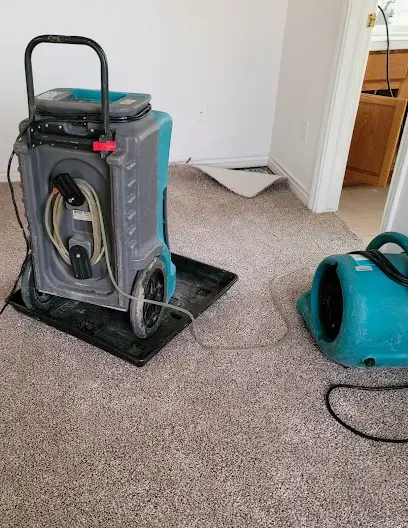
First steps for structural drying and dehumidification in Linden
Measure
Readings set the drying class.
Set equipment
Air movers and dehumidifiers go in, sized to the rooms.
Log each visit
Readings show whether drying is on track.
Remove at dry
Equipment leaves when materials match a dry reference.
How structural drying and dehumidification is handled in Linden
Moisture mapped before equipment
The tech who does the walkthrough reads drywall, framing, subfloor and block foundation walls with pinless meters and thermal imaging first.
Dried to IICRC S500
The drying team follows IICRC S500, the industry drying standard: structural drying, not just surface drying.
A claim file built daily
Daily moisture readings, psychrometric logs and timestamped photos go into the file an adjuster reviews.
Union basement know-how
Sump failures, sewer backups, frozen pipes and Elizabeth River storm water are routine losses for the Union restoration crew.
What does structural drying and dehumidification cost in Linden, NJ?
Structural drying in Linden usually costs between $1,500 and $10,000 or more. The class of the loss matters most, because Class 4 materials take far longer to dry than Class 1 or 2.
Class 1 or 2
- One to two rooms
- Air movers and one LGR
- Three to four days
Class 3
- Walls, ceilings, floors
- Several dehumidifiers
- Daily psychrometric logs
Class 4
- Plaster, hardwood, block
- Desiccant and heat
- Drying mats
Ranges are typical, not a quote: water category, square footage, material class and how fast drying started move the number most. Run the water damage cost calculator for a closer planning range.
The structural drying and dehumidification process, start to dry
Assess
Meters and a thermal camera find wet materials and set the class.
Place
Air movers and dehumidifiers are set to suit the rooms.
Monitor
Readings are logged and equipment is moved as the walls dry.
Release
Equipment is removed once readings match the dry reference.
Drying is a science of air and moisture, not just fans. The drying team measures temperature, humidity and the moisture in each material, then builds a setup that pulls water out of the structure faster than the air can put it back.
Why Linden air matters
Humid air near the Arthur Kill makes drying harder, and flood volumes add more water to remove. Air that is already loaded with moisture cannot absorb more, so dehumidifiers are sized to the space and the doors and windows stay closed while they run.
Drying classes
- Classes 1 and 2 touch a room or two and dry with air movers and an LGR
- Class 3 losses wet walls, ceilings and floors and need several dehumidifiers
- Class 4 losses soak dense plaster, hardwood and block and call for desiccant and heat
The class is set from the first readings and can change as the job goes, so equipment is added or removed on each visit.
Reading the logs
Each visit records temperature, humidity and moisture content, which shows whether the structure is drying or stalling, and the same logs support an insurance claim. Extraction comes first, as in water extraction, and drying then runs after jobs such as burst pipe water damage.
Wet walls or floors in Linden? Call (888) 471-9821, and describe what got wet and how long ago..
Structural drying and dehumidification across Linden and nearby towns
Drying work covers all of Linden, from Tremley Point and Bayway to Grasselli, Sunnyside and Wheatsheaf, and homes and buildings along Route 1/9, Route 27 and Wood Avenue, in ZIP code 07036.
The same service nearby: structural drying and dehumidification in Union, Roselle, Roselle Park.
Related water damage services in Linden
Structural Drying and Dehumidification questions in Linden, NJ
What is the difference between Class 1 and Class 4 water damage?
Class 1 touches little material and dries easily. Class 4 involves dense, deeply soaked material such as plaster, hardwood or block, which needs specialty drying and takes much longer.
Why does drying equipment run around the clock?
Moisture keeps moving out of deep materials, so equipment that stops lets it drift back into the air. Pausing can stall the whole job.
Can a house be dried without removing materials?
Often yes for clean water caught early, using vent holes and injection drying. Contaminated or long-soaked materials still have to be removed.
How do readings prove a structure is dry?
Each material is compared with a dry reference reading taken from an unaffected area of the same material, and equipment stays until the two match.
Does drying raise the electric bill?
Yes, dehumidifiers and air movers draw power for several days. Insurance often accounts for that, and the equipment count is kept to what the readings require.
Dry the structure properly
The drying team maps the moisture, sets equipment to the class of loss and logs readings on every visit until the materials are dry.