Structural Drying and Dehumidification in Roselle Park, NJ
After water is extracted, Roselle Park crews dry the walls, floors and framing with dehumidifiers and air movers, adjusting the setup daily until readings reach a dry standard.
(888) 471-9821Request structural drying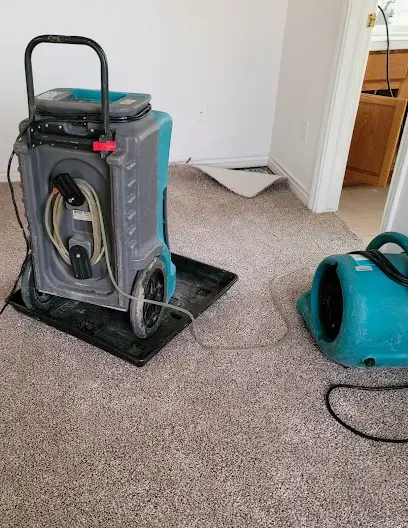
First steps for structural drying and dehumidification in Roselle Park
Keep air moving
Leave interior doors open so air can circulate.
Keep heat steady
A normal indoor temperature helps drying.
Leave equipment on
Equipment should stay running until the crew confirms readings.
Note changes
Report new stains or odors promptly.
How structural drying and dehumidification is handled in Roselle Park
Moisture mapped before equipment
The tech who does the walkthrough reads drywall, framing, subfloor and block foundation walls with pinless meters and thermal imaging first.
Dried to IICRC S500
The drying team follows IICRC S500, the industry drying standard: structural drying, not just surface drying.
A claim file built daily
Daily moisture readings, psychrometric logs and timestamped photos go into the file an adjuster reviews.
Union basement know-how
Sump failures, sewer backups, frozen pipes and Elizabeth River storm water are routine losses for the Union restoration crew.
What does structural drying and dehumidification cost in Roselle Park, NJ?
Drying cost rises with the drying class, the number of rooms and the density of the materials, and Class 4 jobs with plaster, hardwood or block take the most equipment.
Class 1 or 2
- One to two rooms
- Air movers and one LGR
- Several days
Class 3
- Walls, ceilings and floors
- Several dehumidifiers
- Daily psychrometric logs
Class 4
- Plaster, hardwood and block
- Desiccant and heat
- Drying mats
Ranges are typical, not a quote: water category, square footage, material class and how fast drying started move the number most. Run the water damage cost calculator for a closer planning range.
The structural drying and dehumidification process, start to dry
Map
Meters and imaging show which materials are wet.
Set
Dehumidifiers and air movers go in on a planned layout.
Monitor
Temperature, humidity and moisture are logged each day.
Finish
Equipment comes out when readings match a dry reference.
About 73.7 percent of Roselle Park housing was built before 1960, and older walls, plaster and framing hold moisture longer than newer assemblies, so drying has to reach inside wall and floor cavities. Surface dryness is not enough, and readings show what the eye cannot. A room can feel dry while studs and subfloor are still wet.
Drying classes in plain terms
- Class 1 and 2 losses involve one or two rooms with limited wet material
- Class 3 means water came from above and soaked walls, ceilings and floors
- Class 4 covers dense materials such as plaster, hardwood and block that hold water deep inside
- Each class sets how many dehumidifiers and air movers are needed
The class is decided from moisture readings on the first visit and reviewed as drying proceeds.
Daily readings
Temperature, humidity and material moisture are recorded each visit, and equipment is moved or removed as numbers fall. Equipment stays until wall and floor readings match an unaffected room.
Where drying fits
Drying follows water extraction in most losses and supports nearly every other water service. Desiccant and heat are brought in for the densest materials. The main structural drying page has the full method.
Walls still wet in Roselle Park? Call (888) 471-9821, to describe the loss and plan the drying..
Structural drying and dehumidification across Roselle Park and nearby towns
Structural drying runs in Roselle Park homes, rentals and shops, in Lorraine, Aldene and along Westfield Avenue and Chestnut Street, wherever walls, floors or ceilings stayed wet after the standing water was gone.
The same service nearby: structural drying and dehumidification in Union, Roselle, Kenilworth.
Water damage restoration in Roselle Park · every town covered
Related water damage services in Roselle Park
Structural Drying and Dehumidification questions in Roselle Park, NJ
Why can wet walls not just air dry?
Moisture trapped in framing and plaster dries slowly and can feed rot and mold, so controlled dehumidification is needed.
How long does structural drying take?
A few days for a simple loss and one to two weeks where plaster, hardwood or block is involved.
What is an LGR dehumidifier?
A low grain refrigerant unit that pulls moisture from the air even when it is already fairly dry, which helps in cold or tight spaces.
Why are readings logged every day?
They show whether the drying is working and tell the crew when equipment can move or leave. They also support the claim.
Is the equipment loud?
It hums and blows continuously, but running it is what keeps drying on schedule.
Can drying start before demolition?
Yes. Drying can begin early, and demolition happens only where readings show material that cannot dry.
Dry the structure properly
The crew maps the moisture, sets dehumidifiers and air movers and logs readings every day until walls, floors and framing match a dry reference.