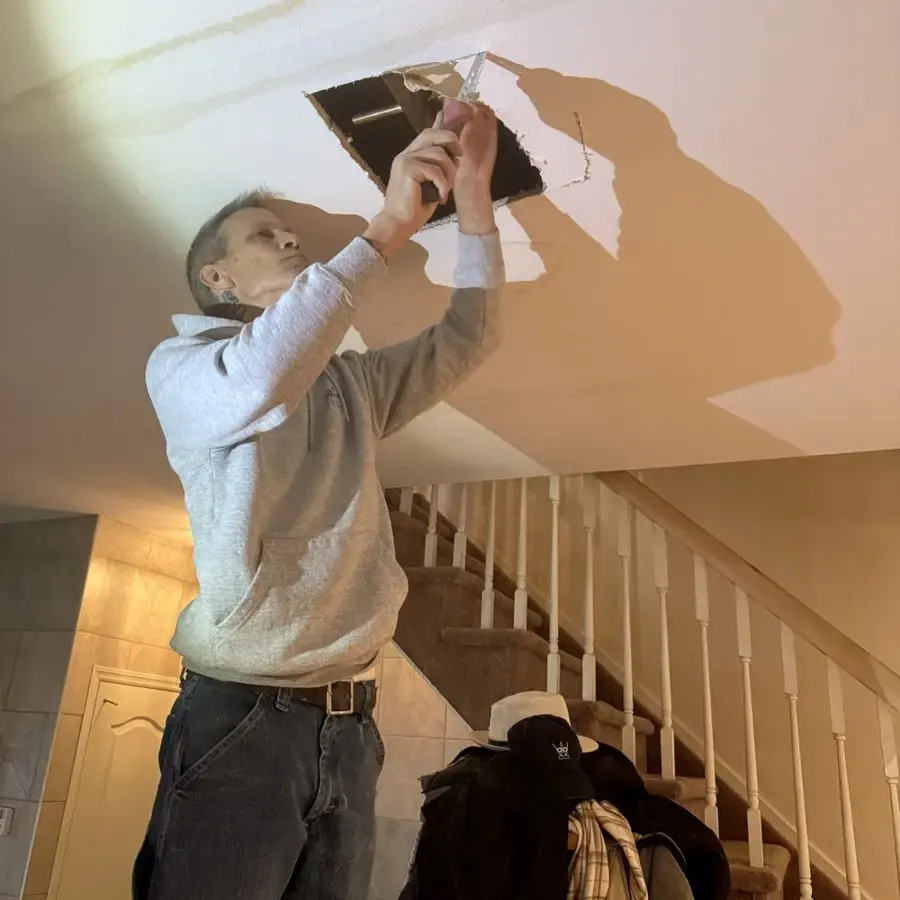
In a single-family house, a leak stays in one place. In an Elizabeth two-family building or apartment house, it does not. Water from one unit travels through floors, ceilings and shared walls into the next.
Key takeaways
- Elizabeth has many two-family, multi-family and apartment buildings, so one leak often damages several units.
- Stop the source first, then pull out the standing water before it moves down.
- Every affected unit needs moisture readings, not only the one where the leak started.
- Owners and tenants should document damage in each unit with photos and dates.
- Drying shared walls and floors needs equipment in more than one apartment.
Why one leak becomes many
Elizabeth is the fourth-most-populous city in New Jersey, with 41,729 households and an average household size of 3.03 people. Many neighborhoods, including Bayway, Keighry Head, The Point and North End, have two-family and multi-family buildings and apartment houses.
In those buildings, floors and ceilings are shared. A supply leak, a failed fixture or a drain problem can send water down through the ceiling below and along walls into the next unit.
Elizabethport, also called E-Port, is the oldest neighborhood, with older homes and apartment buildings and newer waterfront town homes and duplexes. North End was developed mostly in the 1920s and has one and two family homes, apartment houses and condominiums along North Avenue.
Older buildings and many shared walls mean a leak can travel in directions a tenant would not expect. The Elizabeth water damage pros work in this kind of building all the time.
Because a shared building holds more people, the damage often means several households dealing with the same leak. That raises the need for clear communication and a single plan for drying.
The first steps for an owner or tenant
The goal is to stop the water and limit how far it travels.
Tell the owner or manager in writing if possible. A message with photos and a time stamp helps when several units are involved.
Do not assume the leak is confined to one room. Check closets, the unit below and the stairwell, where water often drips from a ceiling seam.
- Shut the water off at the fixture or the building shutoff.
- Switch off power to wet areas if outlets or fixtures are wet.
- Tell the building owner or manager right away.
- Photograph the source, the ceiling and wall stains, and the floor.
- Move belongings out of the path of the water.
- Do not use a ceiling that is bulging or dripping.
If the ceiling is sagging
A ceiling holding water can fall. Keep people away and leave puncturing it to a pro.
Tracing the source
Water often shows up far from where it started. A stain in a bathroom ceiling may come from a unit above, from a wall cavity or from a roof.
The restoration team follows moisture readings through walls and floors to find the path. Finding the source matters because drying a wet ceiling while a supply pipe is still dripping does not work.
The ceiling leak water damage page for Elizabeth walks through how leaks from above are traced and dried.
Common sources in these buildings include a supply pipe in a wall, a failed washing machine hose, a leaking toilet or tub and a drain that backs up. Roof leaks can also run down through several floors.
A top floor unit with a ceiling stain may be getting water from the roof, not from a tenant above. The cause changes who needs to act.
Keep notes on when the stain first appeared and whether it changes after rain, after a shower or after the washing machine runs. Those patterns point to the source and save time.
Extraction in more than one unit
Once the source is stopped, the water extraction crew removes standing water and soaked carpet or padding.
Water that moved down often sits in ceiling cavities and wall bases in the unit below. Those spaces are checked even when the surface looks dry.
Water that reaches carpet and padding is lifted and removed early, because padding holds water like a sponge. Hardwood and laminate floors need a closer look, because water goes under them and does not show.
When a ceiling below has been soaked, the drywall and insulation above it are often wet as well, even though they are out of sight. The team uses moisture meters and thermal imaging to find them.
- Standing water extracted from floors
- Wet carpet and pad lifted or removed
- Ceiling and wall cavities checked with moisture meters
- Wet insulation removed
- Contents moved and protected
Drying shared walls and floors
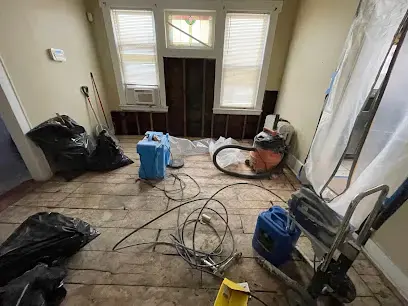
Two-family and multi-family buildings need structural drying that reaches shared walls and floors. That usually means equipment in more than one apartment, sometimes in every unit the water touched.
The restoration team sets air movers and dehumidifiers and logs readings each visit. The goal is to dry the structure back to normal, not only the visible wet spots.
The structural drying page explains how readings decide when equipment can come out.
In a two family building, the team may need access to both floors in one visit. Coordinating that early with the owner keeps the drying schedule from stalling.
Walls that share a plumbing stack often need readings on both sides. Drywall that stays wet is opened to let air reach the cavity.
Documenting and coordinating
In a rented building, several parties are involved: the owner, the tenants and often an insurer for each. Good records make that easier.
Drying is done only when readings match dry reference materials in an unaffected part of the building. That is a measured finish, not a visual one.
In a multi-unit building, the equipment may run in several apartments for several days, which means tenants need clear notice about noise, access and power use.
- Date and time the leak was found
- Photos of each affected unit
- A list of damaged belongings
- Moisture readings and a written scope from the restoration team
- Contact details for everyone involved
Owners, tenants and who does what
Responsibility in a rented building depends on the lease and on what caused the leak, and nothing here is legal advice. The practical side is simpler: the water has to be stopped, removed and dried quickly, whoever pays.
Owners usually control the building shutoff, the roof and the common pipes. Tenants control their own belongings and need to be able to give access for equipment.
A clear plan avoids the most common problem: one unit gets dried while the unit next to it quietly stays wet. That is how stains and odors come back weeks later.
- Owners shut off the building supply and arrange repairs to pipes and roofs.
- Tenants protect belongings and report damage in their own unit.
- The restoration crew documents moisture in every unit that was touched.
- Insurers on each side need photos and the written scope.
Questions
Why does a leak in one apartment affect others?
In two-family and multi-family buildings, floors, ceilings and walls are shared, so water travels into neighboring units.
Who should be called first after a leak?
Shut off the water, then tell the owner or manager and call a restoration crew to extract water and check moisture in every affected unit.
Do the units below need drying even if they look dry?
Yes. Water can sit in ceiling and wall cavities without showing on the surface, so moisture meters are used to check.
Which Elizabeth neighborhoods have many multi-family buildings?
Bayway, Keighry Head, The Point and North End are among the neighborhoods with two-family and multi-family buildings and apartment houses.