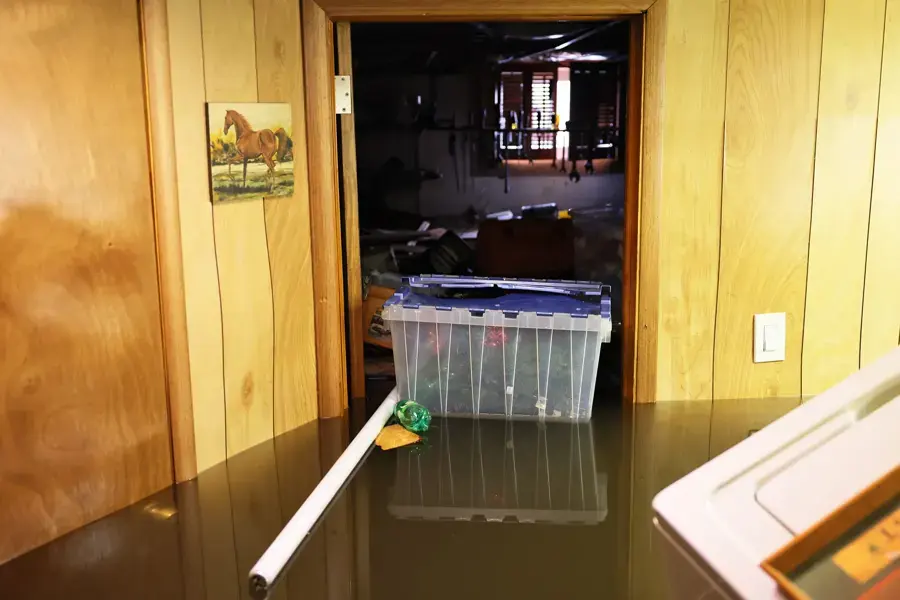
On the west side of Roselle, flooding mostly means one thing: Morses Creek leaving its banks. When it does, the water finds the lowest part of a house, and that is usually the basement.
Key takeaways
- Flooding in Roselle is primarily overbank flow from Morses Creek, so the water often arrives from outside and rises.
- Two FEMA Special Flood Hazard Areas lie on the western side of the borough, both tied to the creek.
- Flood insurance claims concentrate south of West 1st Avenue and around Hory Street.
- Water in a basement is pumped out first, then wet materials are removed and the structure is dried.
- Creek water carries silt and contamination, so it is handled differently from a clean supply leak.
What Morses Creek does to Roselle
Morses Creek, also called West Brook, runs roughly north to south through the west side of Roselle. The borough has done channelization and bank stabilization work along it, including gabion baskets and plantings.
Even with that work, flooding in Roselle is primarily overbank flow from the creek. The Union County hazard plan says minor flooding happens at least annually, with a foot or two at most in the worst areas.
Peach Orchard Brook, also called Jouet Brook, is a drainage tributary named in the borough's mitigation projects.
The county hazard plan counted 359 Roselle parcels with at least 60 percent of their area in the 100 year floodplain and 196 in the 500 year floodplain. Roselle joined the FEMA Community Rating System in 1992.
The borough is built out. About 96.6 percent of Roselle's land is urban or developed, and over 90 percent of parcels are residential, so a creek flood here is mostly a problem for homes rather than open land.
Roselle had 8,431 housing units in the 2020 Census. Most of those are one and two family homes, which means a wet basement usually belongs to a household, not a building manager.
Where the flood claims cluster
Two FEMA Special Flood Hazard Areas lie on the western side of Roselle. Both are tied to Morses Creek.
Flood insurance claims concentrate south of West 1st Avenue and around Hory Street, west of the western branch of the creek.
A homeowner who is not sure whether a street is in the flood zone can ask the borough, since the two Special Flood Hazard Areas are mapped by FEMA. Even a house outside the mapped area can take on water when the creek runs high and storm drains are full.
The Roselle Department of Public Works handles the borough's drainage, and the hazard plan lists a sanitary sewer pump station that needs a backup generator. A storm that stresses the creek can stress other systems at the same time.
- West 3rd Avenue
- West 5th Avenue
- Hory Street
- Kaplan Street
- West 4th Avenue
Repetitive loss streets
Those five streets are the ones with the most repetitive flood loss claims in the borough's records. A basement on one of them has often been wet before.
That history is useful for a homeowner. It means keeping the sump pump, floor drain and any backwater protection in good shape.
The first steps when the creek comes up
A basement filled by creek water needs the same safety steps as any flood: power off, no wading and photographs.
Creek water is not clean. It carries silt and whatever else was on the ground upstream, so the storm flood cleanup team treats the space as contaminated.
If the creek is still rising, do not go into the basement to rescue belongings. Water can go from ankle deep to waist deep while a person is downstairs.
- Shut off power to the basement from a dry spot.
- Do not run a household vacuum on standing water.
- Photograph water marks and damaged items.
- Keep children and pets out of the water.
- Call a restoration crew before pumping a deep basement on your own.
How pumping and drying go
Extraction comes first. The water extraction crew pumps standing water, then uses wand tools on carpet and low spots.
Silt and debris are cleared from the floor. Surfaces touched by creek water are cleaned and treated before drying begins.
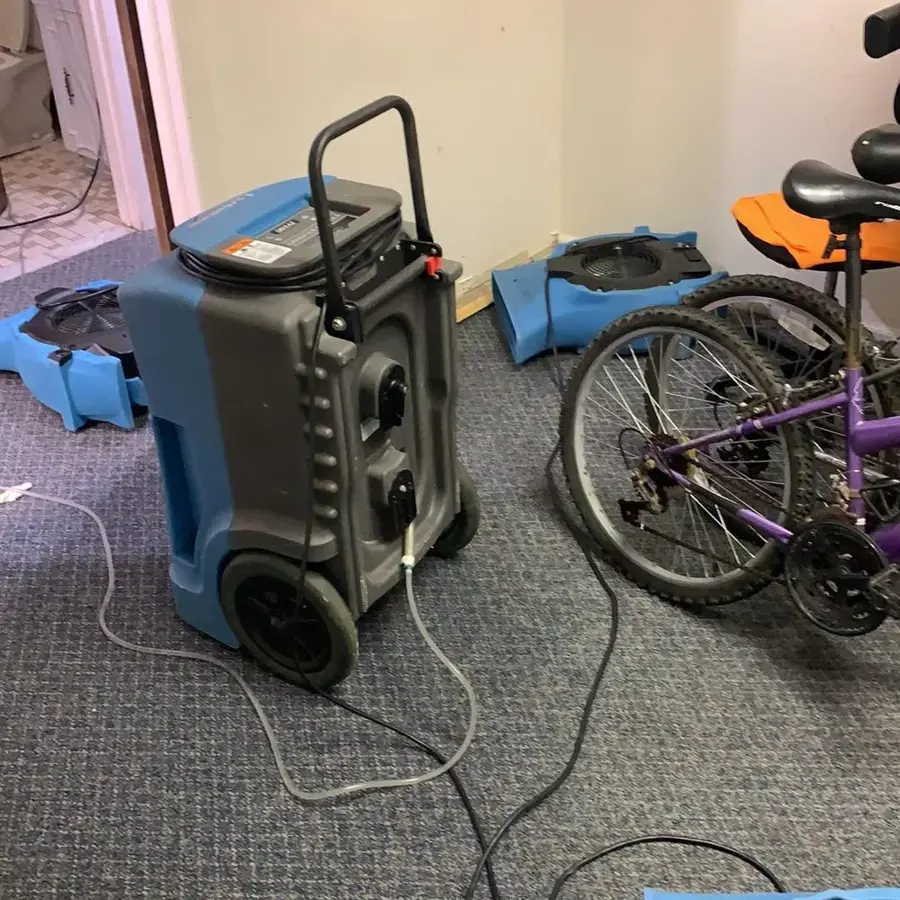
After that, the team opens what holds moisture: wet carpet pad, insulation and baseboard. Air movers and dehumidifiers run on the slab, block walls and framing.
Silt is part of the problem. It dries into a fine dust that settles into carpet, cracks in the slab and the bottom of walls, so it is removed while it is still wet.
After the water and silt are out, the slab and block walls are the slowest part to dry. They hold moisture much longer than carpet, which is why equipment keeps running even after the floor looks fine.
- Pumping and extraction of standing water
- Removal of silt and contaminated materials
- Cleaning and antimicrobial treatment
- Drying with air movers and dehumidifiers
- Moisture readings until walls and floors are dry
What to expect for a basement flood
The basement flooding cleanup page for Roselle shows how scope drives the work. A basement that is unfinished and flooded with clean water takes far less work than a finished one that took in creek water.
Finished walls, built-in shelving and carpet raise the scope. Contaminated water raises it again, because affected materials are removed rather than dried.
Cost is driven by how much was touched. A small flooded utility area is a different job from a finished basement with carpet and drywall.
The storm flood cleanup and basement pages show typical price ranges, and the team writes up the scope after readings are taken.
Preparing a Roselle basement for the next rise
For a house near the creek, the best prevention is a sump pump that works, a clear floor drain and stored items kept off the floor.
After a flood, homeowners should also keep records. Photos, dates and a list of damaged items help with insurance, and the borough's flood history makes claims on these streets familiar territory.
A few habits make a flood less costly the next time.
Store valuables on shelves rather than the floor, keep the floor drain clear and test the sump pump before a forecast storm. If a basement has been wet before, ask the restoration team where the moisture lingered and what to watch.
Renters, finished basements and records
About 40.5 percent of Roselle housing was renter occupied in the 2010 Census, which is above the Union County average of 30.5 percent. A tenant with a basement apartment or storage space should tell the owner about a flood right away.
Flood insurance data from February 2014 showed 155 policies in force in Roselle and 401 claims from 1978 to 2014. Those figures are old, but they show that flood claims are a long-running part of life near the creek.
Whoever pays the bill, good records make the process smoother.
- Photos of the water mark and damaged items
- A list of what was in the basement
- Dates for when the water came in and when it went out
- The restoration team's moisture readings and scope
- Receipts for anything replaced
Questions
Why does Roselle flood from Morses Creek?
Morses Creek runs through the west side of the borough, and flooding in Roselle is primarily overbank flow from it. Two FEMA Special Flood Hazard Areas on the west side are tied to the creek.
Which Roselle streets have repeated flood claims?
Records name West 3rd Avenue, West 5th Avenue, Hory Street, Kaplan Street and West 4th Avenue as the streets with the most repetitive flood loss claims.
Is creek floodwater dangerous?
It can carry silt, debris and contamination, so surfaces and contents that touched it are cleaned and treated, and porous materials are often removed.
How deep does flooding usually get in Roselle?
The county hazard plan says minor flooding occurs at least annually, with a foot or two at most in the worst areas.