Sewage Backup Cleanup in Roselle, NJ
A backup is a health hazard, not just a mess. The cleanup crew contains the area, removes contaminated material and disinfects every surface the sewage touched.
(888) 471-9821Call about a Roselle sewage backup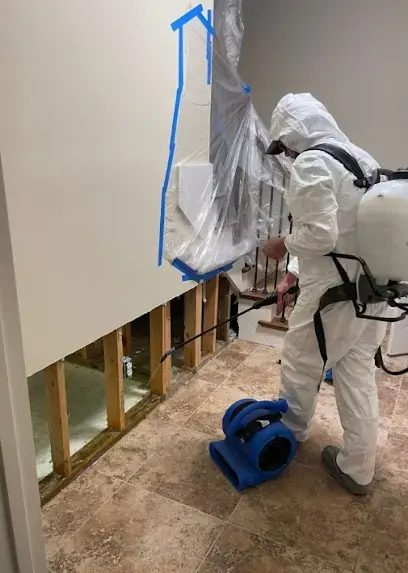
First steps for sewage backup cleanup in Roselle
Keep out
Everyone stays out of the affected area and drains stay unused.
Contain the area
Plastic sheeting seals the work zone before removal begins.
Remove and clean
Contaminated materials are bagged and surfaces are scrubbed.
Disinfect and dry
Antimicrobial treatment, HEPA scrubbing and drying finish the job.
How sewage backup cleanup is handled in Roselle
Moisture mapped before equipment
The tech who does the walkthrough reads drywall, framing, subfloor and block foundation walls with pinless meters and thermal imaging first.
Dried to IICRC S500
The drying team follows IICRC S500, the industry drying standard: structural drying, not just surface drying.
A claim file built daily
Daily moisture readings, psychrometric logs and timestamped photos go into the file an adjuster reviews.
Union basement know-how
Sump failures, sewer backups, frozen pipes and Elizabeth River storm water are routine losses for the Union restoration crew.
What does sewage backup cleanup cost in Roselle, NJ?
Sewage backup cleanup in Roselle typically costs between $3,000 and $16,000 or more, driven by how many rooms the sewage reached, how long it sat and how much porous material has to be removed.
Small floor drain backup
- Containment and PPE
- Hard surfaces scrubbed
- Antimicrobial treatment
Finished basement
- Carpet and drywall removed
- HEPA air scrubbers
- Framing dried
Large or long-sitting
- Several rooms removed
- Cabinets and contents
- Longer monitoring
Ranges are typical, not a quote: water category, square footage, material class and how fast drying started move the number most. Run the water damage cost calculator for a closer planning range.
The sewage backup cleanup process, start to dry
Contain
Plastic sheeting seals the work area.
Remove
Contaminated carpet, padding and drywall are bagged and carried out.
Disinfect
Surfaces are scrubbed and treated with antimicrobial solution.
Dry
Dehumidifiers and HEPA scrubbers run until readings are normal.
Sewage is Category 3 water, which means it can carry bacteria and other pathogens. Anything porous that it touched, such as carpet, padding and drywall, is usually removed instead of cleaned, and the work area is sealed off from the rest of the building.
How a backup is cleaned
- Plastic containment keeps contamination from spreading through the building.
- Workers wear protective suits, gloves and respirators.
- Contaminated porous materials are cut out, bagged and removed.
- Hard surfaces are scrubbed and treated with an antimicrobial product.
HEPA air scrubbers then clean the air, and dehumidifiers dry the structure until readings are normal.
The sewer system in Roselle
The Linden Roselle Sewerage Authority was established in 1948 and operates wastewater treatment and interceptor facilities for Linden and Roselle. The borough's hazard mitigation plan also lists a sanitary sewer pump station that needs a backup generator.
What to do while waiting
Stay out of the affected area, keep children and pets away, and do not run drains or flush toilets until the backup is cleared. Photograph the damage for the claim before any removal begins.
For clean-water problems see water extraction, and for basement-wide damage see basement flooding cleanup.
Sewage in a Roselle building? Call (888) 471-9821, and the restoration team will explain containment and cleanup..
Sewage backup cleanup across Roselle and nearby towns
Roselle wastewater flows to the Linden Roselle Sewerage Authority, and backups inside buildings anywhere in the borough are handled the same way, from floor drains in low basements to bathrooms and kitchens above.
The same service nearby: sewage backup cleanup in Union, Roselle Park, Linden.
Related water damage services in Roselle
Sewage Backup Cleanup questions in Roselle, NJ
Is sewage backup dangerous?
Yes. Sewage can carry bacteria, viruses and parasites, so contact, splashing and breathing contaminated dust should be avoided until trained workers clean it.
Can the carpet be cleaned after a sewage backup?
Usually not. Carpet and padding are porous and absorb contamination, so they are normally removed, while hard floors can be scrubbed and disinfected.
What causes a sewage backup?
Common causes include a blocked drain, heavy rain overwhelming the system and a failure at a pump station, though a plumber should find the exact cause.
Does insurance cover sewage backup?
Often only with a water backup endorsement, since standard policies may exclude it. Photograph the damage first and ask the adjuster what applies.
How long until the building is safe again?
It is safe once contaminated materials are out, surfaces are disinfected and readings confirm the structure is dry, which often takes several days.
Make the building safe again
Sewage contaminates every porous surface it reaches, so containment and removal work best when they begin before the water spreads further.