For a Union shop owner, water damage is not only a repair bill. It is a closed door, spoiled stock and customers who go somewhere else.
Key takeaways
- Stop the water and make the space safe before saving stock.
- Photograph and list damaged inventory before it is moved or discarded.
- Shared walls and ceilings mean a loss in one shop can reach neighbors and apartments above.
- Extraction and drying protect the building and shorten the time a space stays closed.
- A written scope and moisture readings help with the landlord and the insurer.
Why day one matters for a Union business
Union has a commercial strip along Route 22 and apartments over shops on Morris and Stuyvesant Avenues. That mix of retail and housing under one roof means a water loss often reaches more than one party.
The first day sets the course. The steps taken before the restoration team starts work decide how much stock is saved and how far the water travels.
Water that sits in a carpeted office or behind a drywall partition keeps spreading. The goal is to stop the source and start removal as fast as safety allows.
Union's service area includes neighborhoods such as Union Center and Vauxhall, and the township's businesses range from small shops and offices to the strip retail along Route 22. A good first-day plan works for all of them.
Stop the water and make the space safe
Safety comes before inventory. A wet commercial space can have live outlets, display lighting and equipment in the water.
If water is coming from above, do not leave a sagging ceiling or a wet light fixture where someone could walk under it. Block off the area and wait for the pros.
- Shut off the water supply to the source, or the main for the building.
- Turn off power to wet areas from a dry panel.
- Keep customers, staff and tenants out of the affected space.
- Do not step on ceiling tiles or drywall that is bulging or sagging.
- Call the landlord or property manager right away.
- Call a restoration team that handles commercial water damage.
Roof and storm water
Water from a roof leak or storm may carry debris and contamination. Treat it with more care than a clean supply leak.
The remnants of Hurricane Ida on September 1 to 2, 2021 flooded basements across Union County. A shop with a basement stockroom on the Elizabeth River side of the township knows that risk.
Protect and document inventory
Stock, fixtures and records are often the biggest losses, and they are the easiest to dispute later if there is no record.
For a retail shop, the stock room and the front display are usually the largest losses. For an office, it is computers, files and furniture.
Backing up digital records and moving important paper out of the way is a good first step if it can be done safely.
- Photograph or video everything before moving it.
- Make a list of damaged items with quantities and approximate values.
- Move undamaged stock out of the path of water if it is safe.
- Keep damaged items until the insurer says they can go.
- Save receipts for temporary storage and supplies.
Extraction and drying in shared buildings
Once the space is safe, the water extraction crew removes standing water from floors, carpet tile and low spots.
In a building with apartments over shops, the water may have moved into walls and ceilings shared with a unit above or beside. The restoration team follows moisture readings through those shared structures.
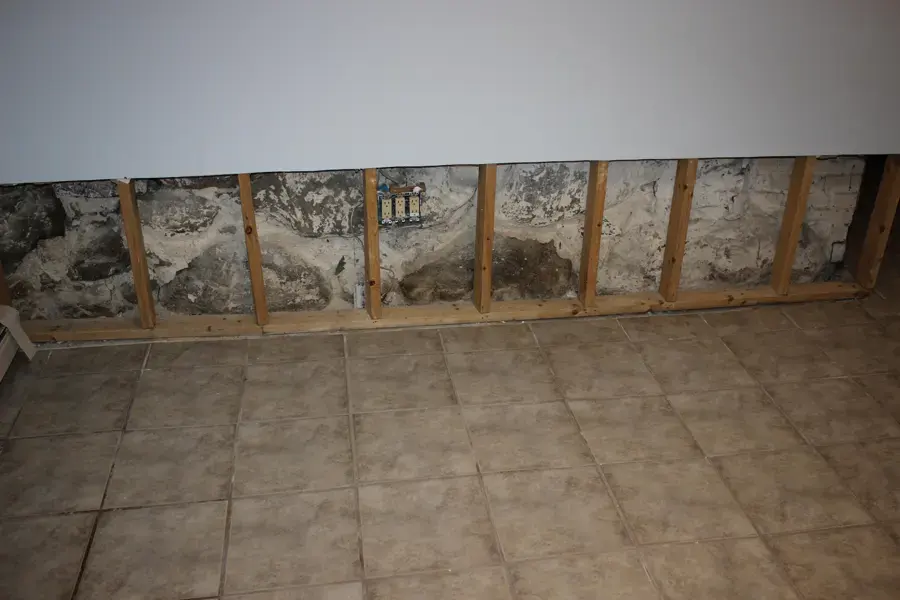
The structural drying work that follows uses air movers and dehumidifiers and logs readings daily. Wet ceiling tile and drywall are removed when they will not dry.
Carpet tile and padding hold water, and so do the walls behind them. A crew that lifts a few tiles and takes readings can say right away whether the water is more widespread than it looks.
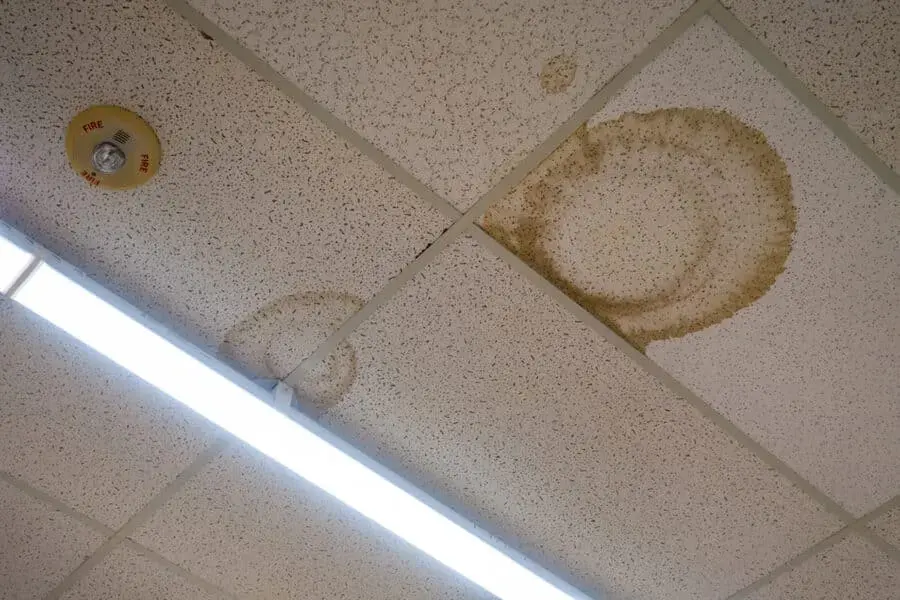
Ceilings are another common path. Water that stains a ceiling tile in one spot may have spread across the plenum above.
- Standing water extracted
- Wet carpet tile, pad and baseboard removed
- Moisture mapped through walls, ceilings and floors
- Air movers and dehumidifiers placed
- Daily readings until the structure is dry
What the first day costs
A single store loss often falls between $4,000 and $12,000 in typical ranges. Several tenant spaces or floors cost more, and a large or sewage loss costs more again.
The commercial water damage page lays out those ranges and what each includes. A written scope after readings is a better basis than any estimate given over the phone.
A basement or storage level adds to the work. The commercial water damage crew handles those spaces the same way, pumping and drying from the lowest point up.
Keeping the doors open
Not every loss means closing. Sometimes the team can dry one area while the rest of the shop operates, with equipment placed to stay out of the way.
Ask the restoration crew how long equipment will run and where it will sit. A clear schedule helps with staffing, deliveries and customers.
For some businesses, an on-site moisture log is useful proof that the work was done. It shows the day, the readings and when equipment was removed.
Working with the landlord and the insurer
Most commercial spaces are rented, so the landlord, the tenant and each insurer all have a role. Who is responsible for what depends on the lease, and nothing here is legal advice.
What helps every party is the same set of records.
Tenants above or beside the shop should also be told. A neighbor who learns about a leak late has a better chance of finding hidden water damage in the wall they share.
- Moisture readings and a written scope from the restoration team
- Dated photos of the loss and the source
- The inventory list with values
- Notes on who was told and when
- Copies of the lease sections about repairs and insurance
Questions
What should a shop owner do first after a water loss?
Stop the water, make the space safe, keep people out and call the landlord and a restoration team. Then photograph and list the damage before anything is moved.
Can water from a shop reach the apartments above?
Yes. Shared walls, floors and ceilings in mixed use buildings let water travel, so the restoration team checks every connected space.
Should damaged inventory be thrown away right away?
No. Keep it until the insurer has seen it or approved disposal, and photograph it first.
How long does drying take?
It depends on the materials and the amount of water. The team logs moisture readings and keeps equipment running until the structure is back to normal.