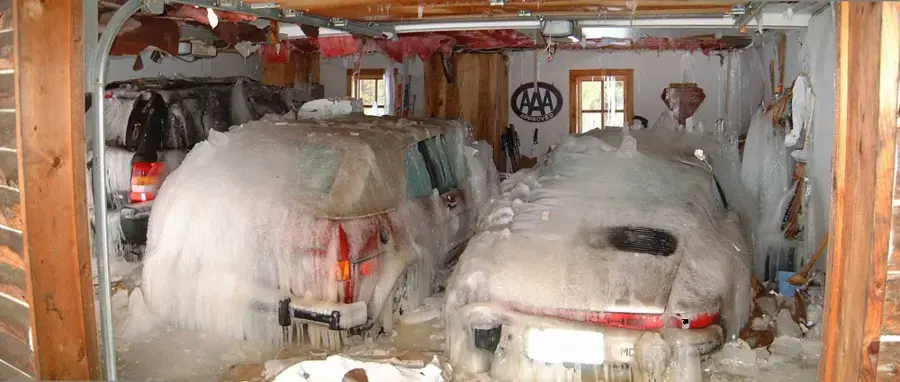
Union Township has cold winters with hard freezes and nor'easters, and many homes were built long before anyone worried about pipe insulation. The pipes that freeze are rarely the ones in the middle of the house.
Key takeaways
- Pipes in exterior walls, unheated crawl spaces and cold basement corners freeze first.
- A frozen pipe that has not burst is a warning. The damage usually happens when ice melts and water flows through a crack.
- Know where the main water shutoff is before the first hard freeze.
- Never thaw a pipe with an open flame. Gentle, steady heat is safer.
- After a burst, the water is stopped, extracted and the wall cavity is dried before repairs.
Where pipes freeze in Union homes
Most Union homes are Cape Cods, colonials and split-levels from the 1920s to the 1960s. Many have aging galvanized and copper supply pipe, and some run through places that never get much heat.
The usual trouble spots follow a pattern. Pipes in exterior walls sit just inside cold masonry or siding with little insulation between them and the outdoors.
Unheated crawl spaces and cold corners of a full basement are next. A pipe near a rim joist, a leaky vent or a drafty window well can freeze even when the rest of the house is warm.
Union's service area spans neighborhoods from Union Center and Vauxhall to Townley, Connecticut Farms, Five Points, Battle Hill, Larchmont, Washington Manor, Putnam Manor and Galloping Hill. The age of the houses, not the neighborhood, is the best predictor of which pipes are at risk.
A house that was renovated might have newer copper or plastic pipe in the kitchen and old galvanized pipe in the basement. The oldest section is often the one that fails first.
- Pipes in exterior walls, especially on the north side
- Supply pipes in unheated crawl spaces
- Pipes near basement windows, rim joists and vents
- Outdoor hose bibs and the pipes behind them
- Pipes in garages and enclosed porches
Warning signs of a frozen pipe
A pipe does not always announce itself. A faucet that runs slowly or not at all in cold weather is the clearest sign.
Frost on an exposed pipe, a bulge in the pipe and a faint smell from a drain can also point to a frozen section.
Check the pipes on the coldest mornings. A quick look at the wall behind a kitchen sink on an exterior wall, or at the pipes near a basement window, can catch a problem early.
What to do when a pipe is frozen but not burst
This is the best moment to act. Water has not escaped yet, and a calm response can prevent the damage.
Open the faucet served by the frozen pipe so water has somewhere to go as ice melts. Then add gentle heat.
Thawing takes patience. Heat applied too fast can crack a pipe that was already weak, so steady and gentle is the rule.
Once water flows again, leave the faucet open for a while and check the pipe, the joints and the wall around it for drips.
- Know where the main shutoff is and be ready to close it.
- Warm the area with a space heater placed safely, a hair dryer or warm towels.
- Start at the faucet end and work back toward the frozen section.
- Never use an open flame, a torch or a heat gun on a pipe.
- Check the whole run for leaks as the pipe thaws.
- Call a plumber if the pipe does not thaw or if it looks cracked.
If the frozen pipe is inside a wall
Do not cut into the wall unless a plumber or restoration pro says to. Raising the heat in the room and opening cabinet doors on the exterior wall can help warm the cavity.
What to do when a pipe has burst
A burst pipe can release a lot of water in a short time, so the first goal is to stop the flow.
Close the main shutoff, then open a faucet at the lowest point to drain what remains. If outlets or fixtures are in the water, shut off power from a dry spot.
Photograph the damage before it is moved, and call a restoration team. The burst pipe water damage page explains how a burst pipe loss is handled.
Turn off the water heater if the water to it has been shut off, and do not turn it back on until the system is full. That is a general safety step that a plumber can confirm for the specific home.
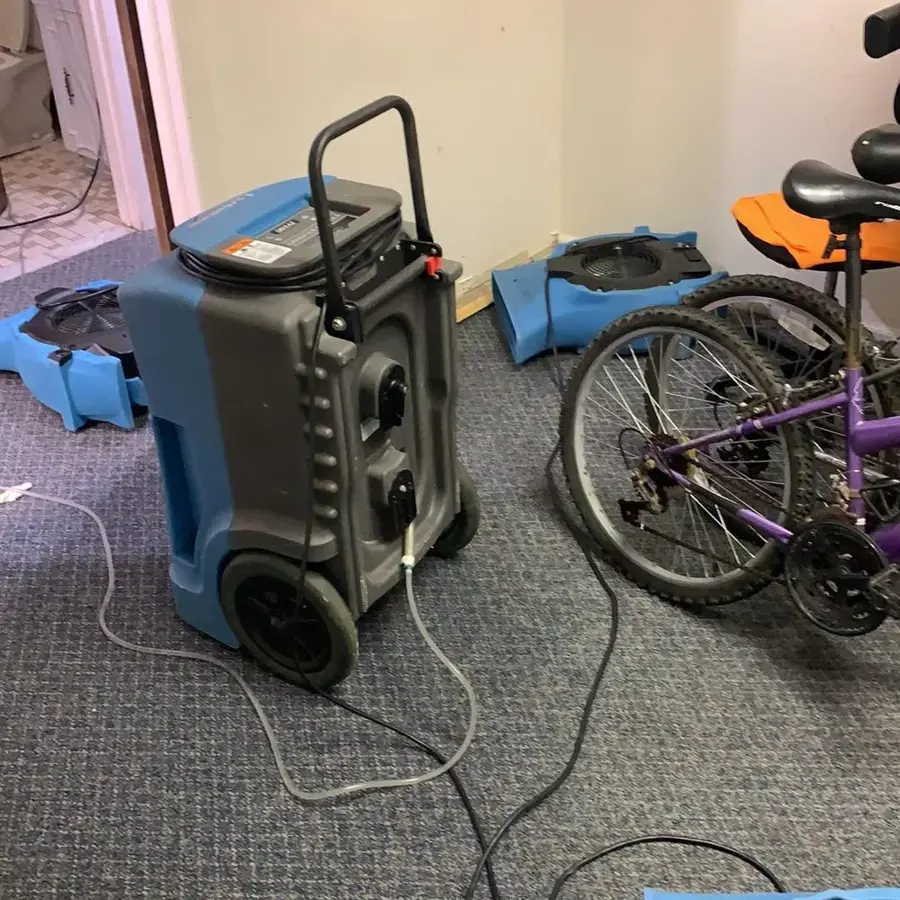
How a frozen pipe loss is dried
Water from a freeze burst often runs down inside a wall and into the ceiling or floor below. The surface may look fine while the cavity stays wet.
The frozen pipe water damage crew extracts standing water and uses moisture meters to follow the water through the structure. Wet insulation is removed, and small holes or cuts in drywall let drying air reach the cavity.
Air movers and dehumidifiers then run until readings return to normal. The structural drying page explains why the equipment stays after the room looks dry.
- Water extracted from floors and low spots
- Moisture mapped through walls and ceilings
- Wet insulation and soaked drywall removed where needed
- Heated drying with air movers and dehumidifiers
- Readings logged until the structure is dry
Why a freeze loss can be bigger than it looks
A pipe that splits in an exterior wall can run for a long time before anyone notices, especially in a vacant room or a seasonal space. The longer it runs, the more of the structure it reaches.
A loss caught at the thaw, with one wall or cabinet affected, typically falls in the range of $2,000 to $4,000. When water reaches the floor or ceiling below, or is found days later, the range climbs.
The drying time estimator and the water damage cost calculator give a rough sense of scope before a team assesses the home.
Water that runs inside a wall for a while can also reach the ceiling below and the insulation in an attic or crawl space. Those materials hold water, and they dry slowly.
Microbial growth can start within about two days on damp materials, which is why the drying starts quickly after the source is stopped.
Getting ready before the first hard freeze
A few steps before winter make a big difference in an older Union home.
Pipe insulation sleeves from a hardware store are inexpensive and easy to fit. Heat tape can help in a spot that is hard to insulate, but it needs to be used exactly as the maker directs.
- Find and label the main water shutoff.
- Insulate exposed pipes in crawl spaces and basement corners.
- Seal gaps around vents, sill plates and windows.
- Disconnect hoses and shut off outdoor spigots.
- Open cabinet doors on exterior walls during a hard freeze.
- Let a faucet drip when a deep freeze is forecast.
- Keep the heat on if the house will be empty.
Questions
Which pipes in a Union home freeze first?
Pipes in exterior walls, unheated crawl spaces and cold basement corners freeze first, especially in older homes with limited insulation.
Should I turn the water off if a pipe is frozen?
If the pipe has not burst, open the faucet and thaw it gently while staying ready to close the main shutoff. If it bursts, close the main shutoff right away.
Can I use a torch or heat gun to thaw a pipe?
No. Open flames and high heat can damage the pipe and start a fire. Use a hair dryer, warm towels or a space heater placed safely.
Why does a burst pipe often show up after the thaw?
Ice can block a split. When it melts, water flows through the crack, so damage often appears after temperatures rise.