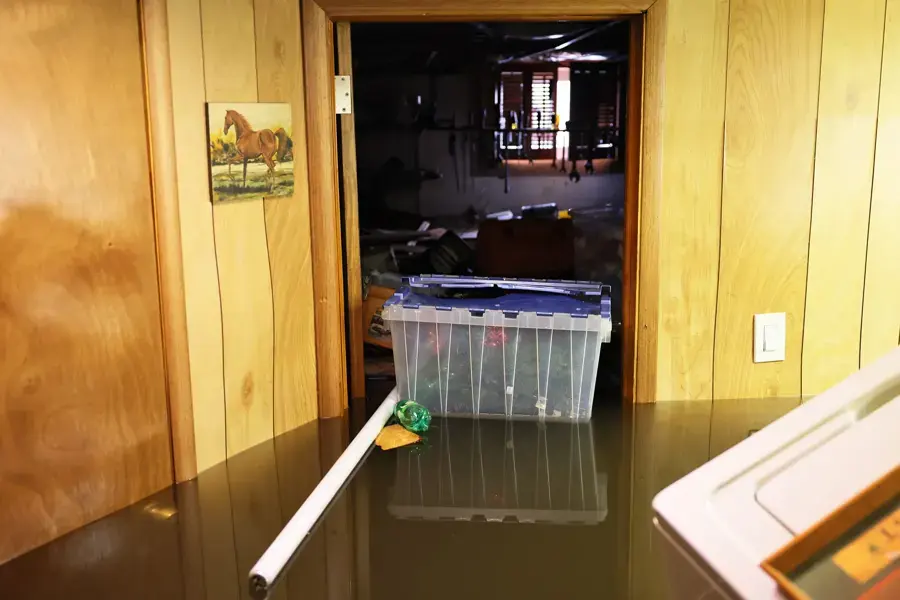
A flooded basement in Union Township feels like an emergency because it is one, but the first decisions matter more than the first mop strokes. Power, the source of the water and what the water touched decide how the cleanup goes.
Key takeaways
- Stay out of a flooded basement until the power to it is off and the water level is known.
- Check the sump pump and the floor drain early, because they point to where the water came from.
- Photograph the water mark, damaged items and appliances before anything is moved.
- Water that stays on a slab, block wall or carpet pad starts causing secondary damage fast, so extraction and drying come before repairs.
- Clean rain and sewage need different handling, so a drain that is bubbling or smells changes the plan.
Why Union basements take on water
Most homes in Union Township are Cape Cods, colonials and split-levels from the 1920s to the 1960s, and most have full basements. That puts a lot of finished and storage space below grade.
The township also sits between two rivers. The Elizabeth River flows through Union toward Hillside and Elizabeth, and the Rahway River corridor runs along the west side.
The remnants of Hurricane Ida on September 1 to 2, 2021 flooded basements across Union County. Hurricane Irene in 2011 and Hurricane Floyd in 1999 flooded the Rahway River valley.
Not every wet basement is a river event. A heavy rain can overload a yard, a window well or a floor drain without any river ever leaving its banks.
Because so many of these houses have full basements, a basement flood in Union is rarely just a damp corner. It can mean a family room, a laundry area, a workshop and a furnace all sitting in the same water.
The first steps before anything gets touched
Safety comes before saving belongings. Standing water and electricity are a dangerous mix.
Wet concrete stairs are slick, so take the same care going down that applies to walking through water. A fall in a flooded basement is a real risk on top of the electrical one.
- Do not step into water if the basement has outlets, a furnace, a washer or a water heater that could be live.
- Have the power to the basement shut off at the panel from a dry spot, or have an electrician do it.
- If gas appliances are in the water, leave the pilot and gas decisions to the utility or a pro.
- Keep children and pets out of the space.
- Photograph the water mark on the walls, the damaged contents and the appliance labels.
- Move only what can be lifted without wading, such as boxes on a high shelf.
If the water is still rising
Watch where it enters. Water coming through a window well, a wall crack or a floor drain tells the restoration team a lot about the source.
Leave pumping a deep basement to the pros. Draining a flooded basement too fast can push a saturated wall inward.
Sump pump and floor drain: what to check
A working sump pump moves water away from the foundation. When it stops during a storm, the basement can fill from groundwater alone.
The sump pump
Look for a tripped breaker, an unplugged cord, a float stuck against the pit wall or a pump that runs without moving water.
A pump that cannot keep up in a long rain may need replacing, which is its own repair. The sump pump failure cleanup page explains how the water from a failed pump is handled.
- A pump that hums but does not pump often has a failed impeller or a blocked discharge.
- A silent pump may have lost power or a float switch.
The floor drain
Union's older homes often have a basement floor drain tied to the home's sewer pipe. If water comes up through that drain, it may not be rain.
Water that rises from a drain, smells foul or looks gray or dark should be treated as sewage until proven otherwise. That changes protective gear, disposal and what can be kept.
How extraction and drying work
Water that sits on a concrete slab works into carpet, wall bases and anything stored on the floor. The water extraction crew removes the standing water first, usually with pumps and wand tools, so drying can start.
After the bulk water is gone, moisture readings map what is still wet. Air movers and dehumidifiers then pull moisture out of the slab, block walls and wood framing.
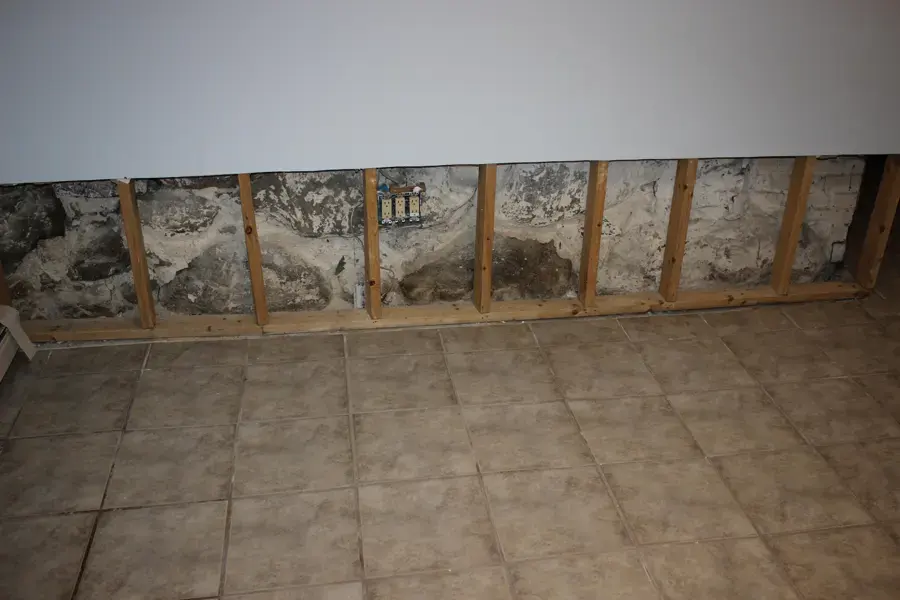
For a Union basement with a finished side, drywall, insulation and flooring are checked and cut out where they stay wet. Unfinished basements usually need slab and block wall drying with a lot less demolition.
Drying is measured, not guessed. The team returns to the readings until the materials are back to normal, and the basement flooding cleanup page lays out typical ranges.
Speed matters because wet drywall, wood framing and carpet pad begin to break down quickly, and microbial growth can start in about two days. That is why the work is about getting materials dry, not only getting the water out.
- Standing water is pumped out and extracted from carpet and low spots.
- Wet padding and soaked baseboards are removed.
- Air movers and dehumidifiers run while readings are logged.
- Wall cavities and finished surfaces are opened only where readings call for it.
What can be saved and what goes
Clean rain is a different problem from sewage or river floodwater. Contents sorted early are easier to save.
- Hard items such as metal shelving, plastic bins and tools can usually be cleaned and dried.
- Carpet pad, insulation and soaked drywall usually go.
- Cardboard boxes, books and papers need quick sorting, because they hold water and break down.
- Anything that touched sewage or river water is handled with much more caution.
Keeping the next storm out of the basement
Once the space is dry, look at why the water came in. Gutters that dump at the foundation, a window well with no cover and a sump pump with no backup power are common causes.
The basement flood risk check helps a homeowner think through risk factors. A pump that works only until the power goes out leaves a basement exposed during the worst storms.
Union homeowners also sometimes forget the floor drain. A drain with standing debris or a rusted cover can fail when it is needed most.
A basement that flooded once can flood again, so ask the crew what they saw. They can point out where water entered and whether the pump, the drain or the grade outside is the likely cause.
Clean water, river water or sewage: why the source matters
The source of the water sets the cleanup. Clean rain that seeped through a window well is handled as a water loss, while river water carries silt and contamination and sewage carries bacteria.
Union sits near two rivers, so a basement after a major storm can hold a mix. When the source is unclear, the restoration team treats the water as contaminated and removes porous materials rather than trying to save them.
A few clues help sort it out before the team starts work.
- Clear water coming through a window well or a wall crack points to rain or groundwater.
- Brown, silty water with debris points to river or street flooding.
- Dark, foul water rising from a drain points to sewage.
- A sheen or an odor like fuel or oil points to something stored in the basement.
When a drain is the source
The sewage backup cleanup page covers what changes when a drain is the path. Protective gear, containment and disposal all step up, and the area is cleaned and treated rather than only dried.
Questions
Should I turn off the power to a flooded basement?
Yes, if it can be done from a dry spot. If the panel is in the wet basement, an electrician or the utility should handle it. Never wade into water near live outlets or appliances.
Is the water from a floor drain sewage?
It can be. Water that rises through a drain, smells foul or looks dark is treated as sewage until a pro says otherwise, which changes the cleanup steps.
How is a flooded basement dried?
The standing water is pumped and extracted, wet materials are removed where needed, and air movers and dehumidifiers run until moisture readings return to normal.
Did Hurricane Ida flood basements in Union County?
The remnants of Hurricane Ida on September 1 to 2, 2021 flooded basements across Union County, and the Elizabeth River and Rahway River corridors are part of Union Township's flood history.