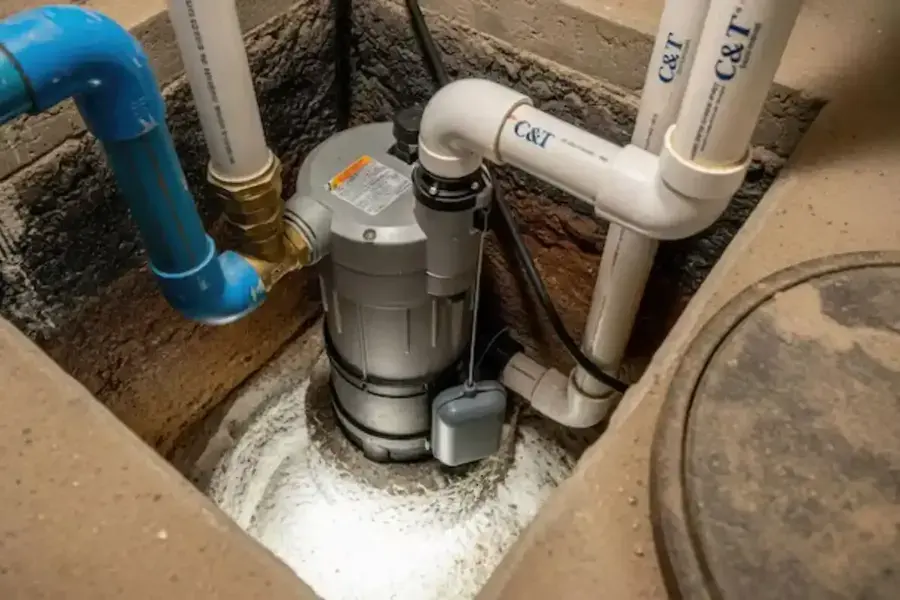
A sump pump usually fails when it is needed most, during a storm. In Kenilworth, a failed pump leads to two jobs: cleaning up the water and replacing the pump the right way.
Key takeaways
- Kenilworth requires building permits for sump pumps, along with water heaters, boilers, furnaces and piping changes.
- The building department allows emergency repairs, with the permit obtained as soon as possible and no more than 72 hours later.
- A 2010 news report said Kenilworth adopted an ordinance targeting illegal sump pump connections.
- The Rahway River is the borough's main source of flooding, so a pump matters most in a river storm.
- Water cleanup starts with extraction, then drying of the slab, walls and anything stored on the floor.
Why the pump matters in Kenilworth
The Rahway River runs along Kenilworth's western border and is the borough's main source of flooding. The 2015 Union County Hazard Mitigation Plan rated flood as the only high priority hazard for Kenilworth.
The plan says minor flooding happens at least annually, with the most flood-prone areas occasionally seeing a foot or two of water. Hurricane Irene in August 2011 caused most of Kenilworth's flood insurance claims.
Not all basement water comes from the river. In a long rain, groundwater around the foundation can push into a basement, and the sump pump is what keeps it out.
Kenilworth had 151 National Flood Insurance Program claims between 1978 and 2014 and joined the program in 1983. In February 2026 the borough passed a resolution urging reauthorization of the Rahway River flood control study, citing repeated flooding in the watershed.
The borough's Department of Public Works maintains the sanitary sewers, manholes, 548 storm water catch basins and a pump station. That public system does not replace a home's own sump pump, which protects one foundation at a time.
Replacing a sump pump: the permit
A replacement is not only a plumbing swap. Kenilworth requires building permits for sump pumps.
Local rules can change, so a homeowner should check current requirements with the Kenilworth Building Department rather than rely on a blog post. Treat the questions here as a starting point, not a substitute for the department.
A plumber who works in the borough will usually know the process. The homeowner's job is to make sure the permit actually gets filed.
Emergency repairs
The Kenilworth building department allows emergency repairs, such as a broken water heater, with the permit obtained as soon as possible and no more than 72 hours later.
Building department staff put owners with emergency work on an Emergency Work List. A homeowner should ask the plumber how the permit is being handled.
Sump pump connections
A 2010 news report said Kenilworth adopted an ordinance targeting illegal sump pump connections, with the building department inspecting them on properties changing hands.
Nothing here claims that ordinance is enforced today. It is a reason to ask the building department how a pump discharge must be connected.
What to do when the pump fails mid storm
Safety is the first step. A flooded basement may have live outlets and appliances in the water.
Do not try to bail a deep basement with a pump borrowed from a neighbor and run through a hose out a window. Dumping water next to the foundation can send it right back in.
- Shut off power to the basement from a dry spot.
- Check the pump cord, breaker and float for an obvious cause.
- Do not run the pump from an extension cord across standing water.
- Photograph the water mark and the pump.
- Call for extraction before the water works into walls and stored items.
How the water is removed and the basement dried
The sump pump failure cleanup crew starts with extraction. Pumps and wand tools pull standing water off the floor and out of carpet.
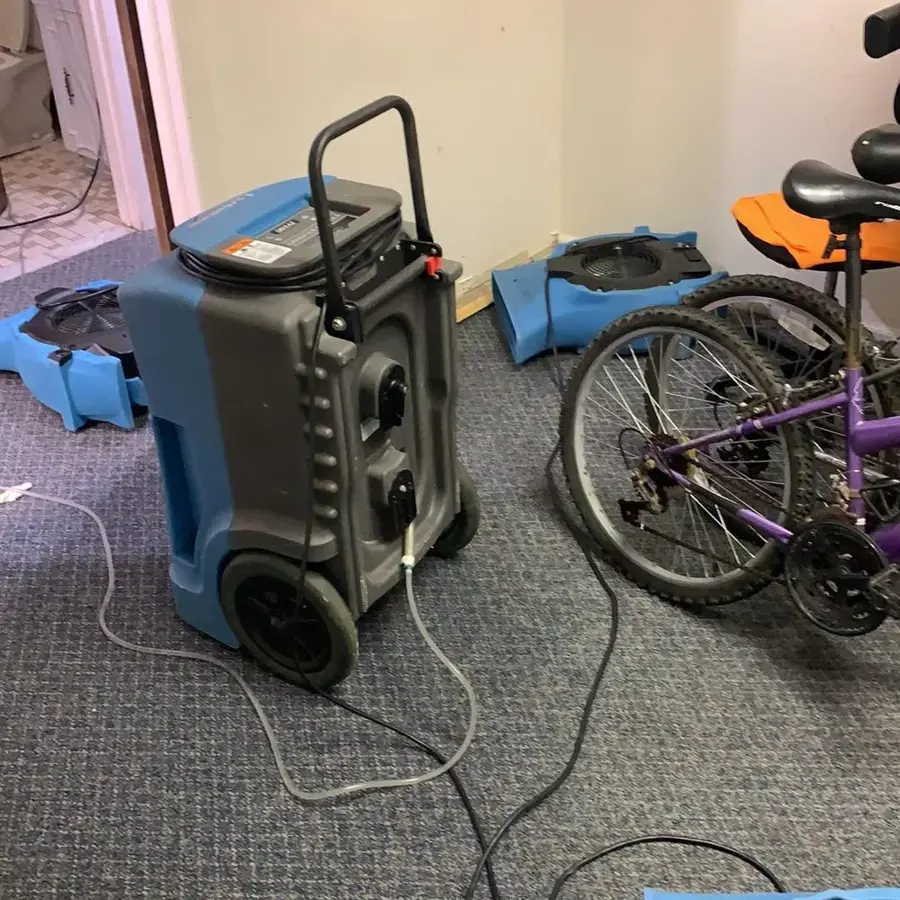
Then the team measures moisture in the slab, block walls and framing. Air movers and dehumidifiers dry what is wet.
Finished basements need more checking, because carpet, pad, drywall and insulation hold water. The basement flooding cleanup page for the borough shows how scope changes the work.
A finished basement raises the work, because pad, drywall and insulation hold water longer than slab. The team opens only what the readings call for.
Water from a failed pump is often groundwater, which is cleaner than river water. If the Rahway River was also high or a drain backed up, the water is treated as contaminated.
- Extraction of standing water
- Removal of soaked pad, insulation and baseboard
- Antimicrobial cleaning where needed
- Air movers and dehumidifiers
- Readings logged until materials are dry
When the pump failure is really a flood
If the Rahway River is high, a pump failure is only part of the story. Floodwater can enter through walls and floors, and the pump is the last safeguard, which makes a battery backup worth asking about.
The floodplain north of Boulevard around Dorset Drive, Epping Drive, Pembrook Drive, Sherwood Road and Brasser Lane is where most of the FEMA 100 year floodplain sits. A second flood area lies in southeastern Kenilworth, near Summit Avenue and Richfield Avenue.
A battery backup or a second pump gives a basement a way to keep running when the power goes out in a storm. It is worth asking the plumber about before the next one.
Documenting the loss
Keep the pump, the permit paperwork and photos of the water mark. A record of the failure and the repair helps with an insurance claim and with the building department.
Ask the restoration team for moisture readings and a written scope. Those show what was wet and what was dried.
A pump that fails once is a warning. Ask whether the pit is deep enough, whether the discharge pipe is clear and whether the pump is sized for the basement.
The Kenilworth water damage pros can walk through what they see in the basement after the water is out. That includes where water entered and which walls stayed wet longest.
Questions to ask before a pump is replaced
A homeowner does not have to know the borough code by heart. A few questions to the plumber and the building department cover most of it.
Creeks and streams on private property in Kenilworth remain the owner's responsibility, and neither the borough nor the State does regular cleaning of them. A homeowner next to a stream should keep that in mind when the yard is draining badly.
- Who is pulling the building permit, and when?
- Where does the pump discharge, and is that connection allowed?
- Is there a check valve, and is a battery backup an option?
- Does the job need to go on the Emergency Work List?
- Who pays for an inspection if one is required?
After the repair
Ask for the permit paperwork and keep it with the house records. A property that changes hands is where the 2010 report said the building department checked sump pump connections.
Questions
Does Kenilworth require a permit for a sump pump?
Yes. Kenilworth requires building permits for sump pumps, along with water heaters, boilers, furnaces and piping changes.
Can a failed sump pump be replaced as an emergency?
The building department allows emergency repairs, with the permit obtained as soon as possible and no more than 72 hours later. The owner should confirm the details with the department.
What was the 2010 sump pump ordinance?
A 2010 news report said Kenilworth adopted an ordinance targeting illegal sump pump connections, with inspections on properties changing hands.
What causes most flooding in Kenilworth?
The Rahway River, along the borough's western border, is the main source of flooding.